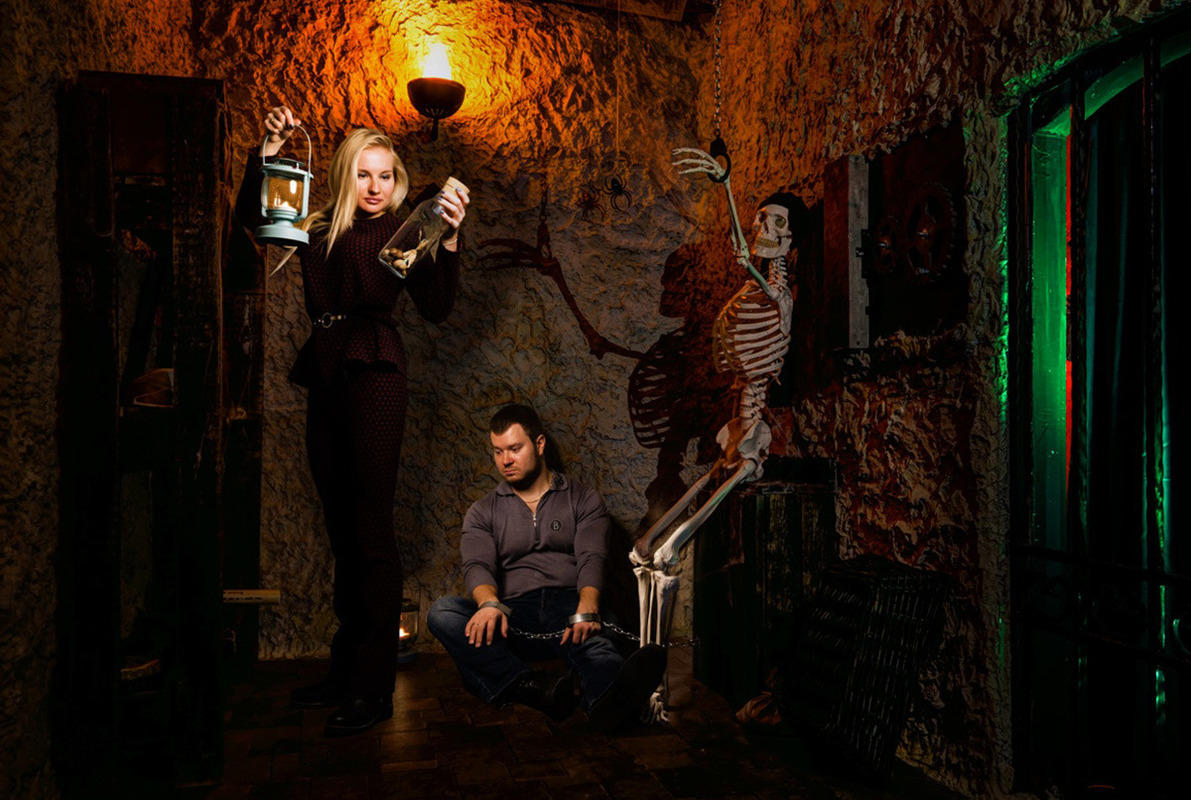
You won't know exactly what's behind the door until you're in the room — reviews avoid spoilers on purpose. But the puzzle types repeat across almost every room, so it helps to know roughly what you're walking into.
| Puzzle type | What it involves | How to approach it |
|---|---|---|
| Search & observation | Finding hidden objects, numbers or symbols placed around the room | Split the room into zones and search methodically rather than everyone looking at the same spot |
| Logic & math | Ciphers, sequences, basic arithmetic, sometimes Roman numerals | Write things down — most logic puzzles get easier once they're on paper instead of in your head |
| Physical & dexterity | Fitting pieces together, reaching tight spaces, sometimes light physical activity | No athletic skill required — patience and a second pair of hands usually beats brute force |
| Multi-person tasks | Puzzles built so one person literally cannot solve them alone | If something needs two people at once, say so immediately rather than trying it solo first |
For more on team dynamics once you're actually in the room, see tips to ace your first escape room.